CNV Internationaal has published a new report mapping the nickel supply chain—from mines and smelters in Indonesia to electric vehicles, wind turbines, and solar panels in Europe. The findings expose serious abuses and call for urgent action to ensure a fair and sustainable energy transition.
A Blast. Eight Surgeries. A Mutilated Hand.
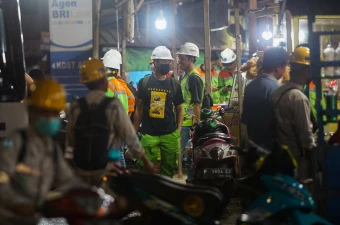
For La-Taha, a worker in Indonesia’s nickel industry, everything changed on 24 December 2023. He survived a devastating explosion at a nickel smelter in Morowali, but the physical and emotional scars remain. His story is not unique.

What’s Going Wrong in the Nickel Industry?
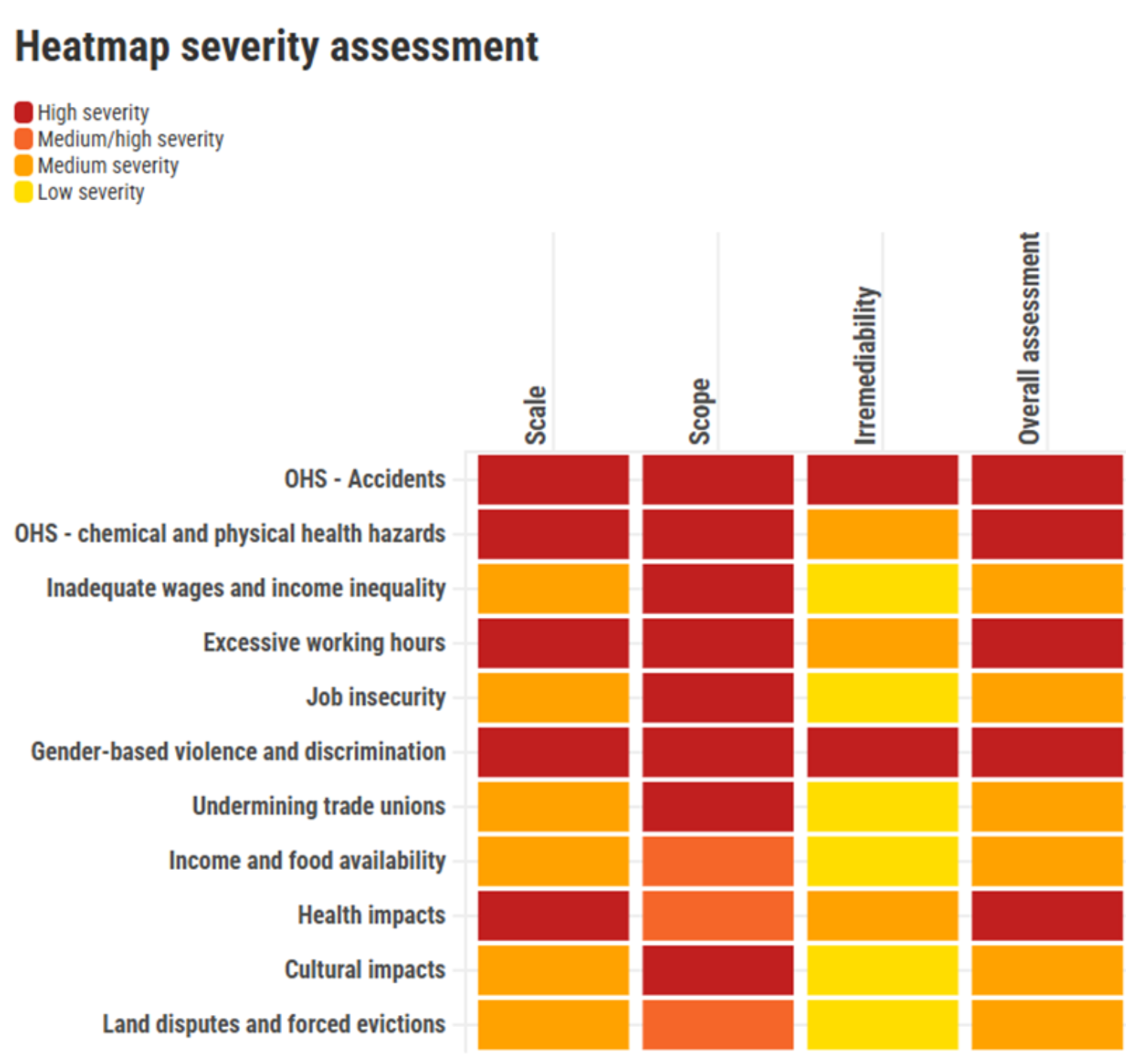
See the heatmap below for the severity of reported issues.
Key findings from the research include:
- 107 fatal accidents between 2019 and 2025
- 56-hour work weeks under hazardous conditions
- Labour issues: poor safety standards, low wages, excessive working hours, gender-based violence, and suppression of trade unions
- Community impacts: pollution, deforestation, water contamination, food insecurity, and forced displacement
- Cultural impacts: displacement of Indigenous communities and loss of traditional livelihoods
“Even after more than a year of recovery, I still can’t use my hand. It constantly itches and cramps. My body is permanently scarred.”
La-Taha, survivor of the Tsingshan Stainless Steel explosion
Economic Growth with a Dark Side
Indonesia is now the world’s leading exporter of nickel products. In Central Sulawesi alone, 117 nickel companies are active. At the centre of this boom is the Indonesia Morowali Industrial Park (IMIP), a 5,500-hectare complex hosting over 50 companies.
But this growth comes at a cost:
- Poor working conditions
- Air pollution
- Forced evictions
- Systemic labour rights violations
Connected to Europe
The research traces nickel from four industrial zones in Morowali and North Morowali to end products in the EU. Through suppliers such as CATL, GEM, and POSCO, strong links were found to major car brands:
Volvo, Tesla, Mercedes-Benz, Ford, and Volkswagen
Supply chains for solar and wind energy are less transparent. Companies in these sectors rarely disclose sourcing relationships, making accountability difficult.
Another zone, the Indonesia Huabao Industrial Park (IHIP), is still under development but already shows potential links to Europe via Thyssenkrupp Materials, a supplier to BMW, Stellantis, and Toyota.
What Needs to Change?
CNV Internationaal calls for a just energy transition that puts workers’ rights and environmental standards at the forefront.
1. Strengthen Social Dialogue
Trade unions must be allowed and empowered to negotiate better working conditions through collective bargaining.
2. Build Alliances
Collaboration between unions, civil society organisations, and companies—both local and international—is essential. Multi-stakeholder initiatives such as the global Initiative for Responsible Mining Assurance IRMA provide a useful framework.
3. Use Supply Chain Leverage
European companies can demand transparency and improved practices from their suppliers. Supporting cooperation between mining companies and local unions is key.
Working Together for Fair Impact
CNV Internationaal is committed to facilitating dialogue between workers, companies, civil society organisations, and governments. Together, we aim to build a nickel sector that not only powers Europe’s green future but also uplifts the communities at the start of the supply chain.
This supply chain mapping was published under the Netherlands’ Renewable Energy Agreement, with support from the Netherlands Enterprise Agency (RVO). The Agreement brings together solar and wind energy companies, industry associations, the Dutch government, knowledge institutions, NGOs, and trade unions to jointly improve sustainability in international value chains.
Publication date 10 09 2025
 Progress on the labour rights and just transition agenda in Colombia
  Strengthening workers’ human rights in Indonesia’s critical minerals industry
  From Displacement to Empowerment: Women’s Struggle in the Nickel Supply Chain