Between 23 and 29 April, representatives of CNV Internationaal, together with the mission team in Colombia, developed an intense work agenda focused on the promotion of living wages, the strengthening of labour rights and the active participation of the trade union movement in the processes of just energy transition in the country.
During this week, spaces for dialogue, training and advocacy were consolidated to strengthen strategic alliances with key actors in the government sector, employers, trade union organisations and national and international non-governmental organisations.
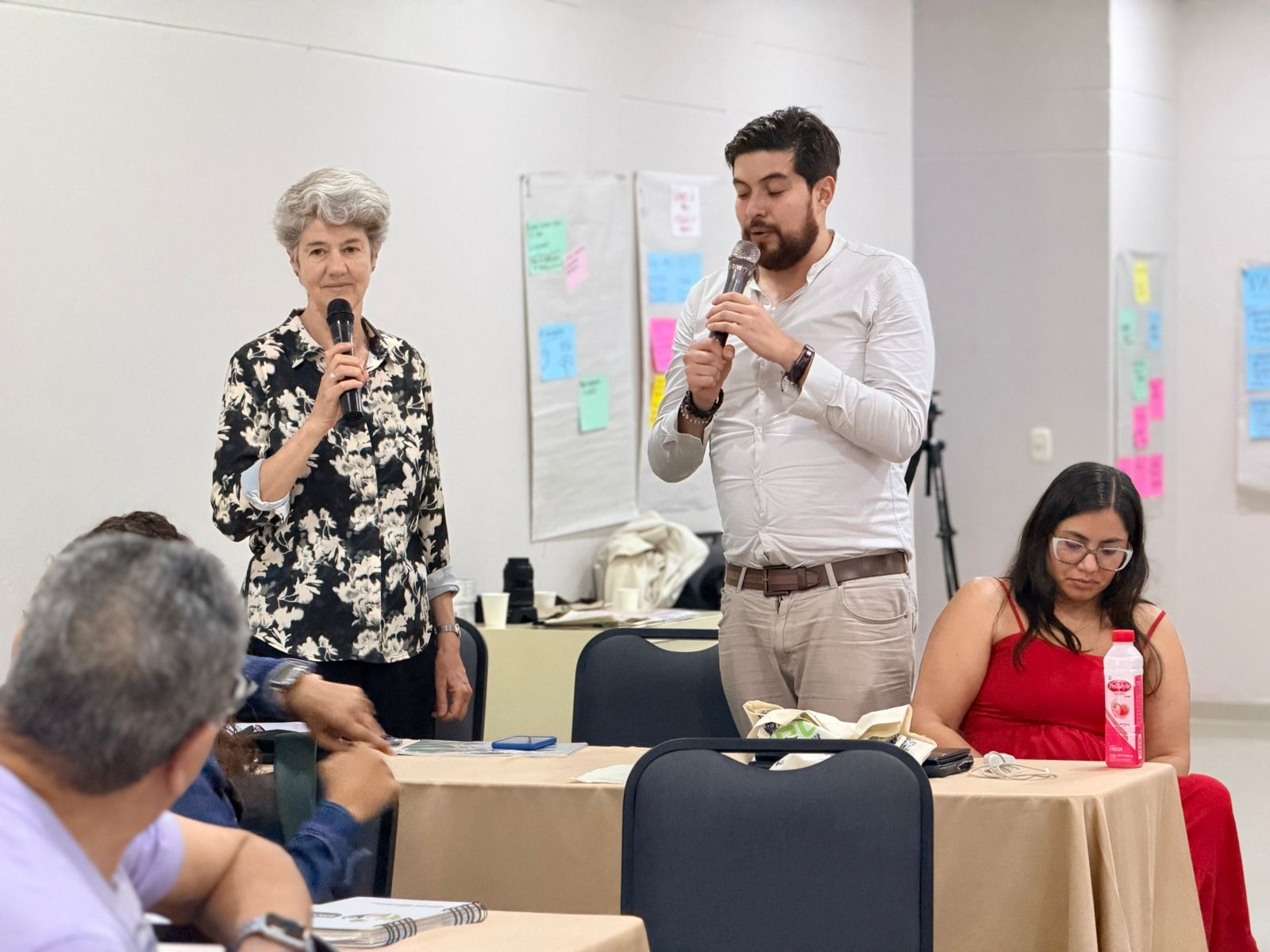
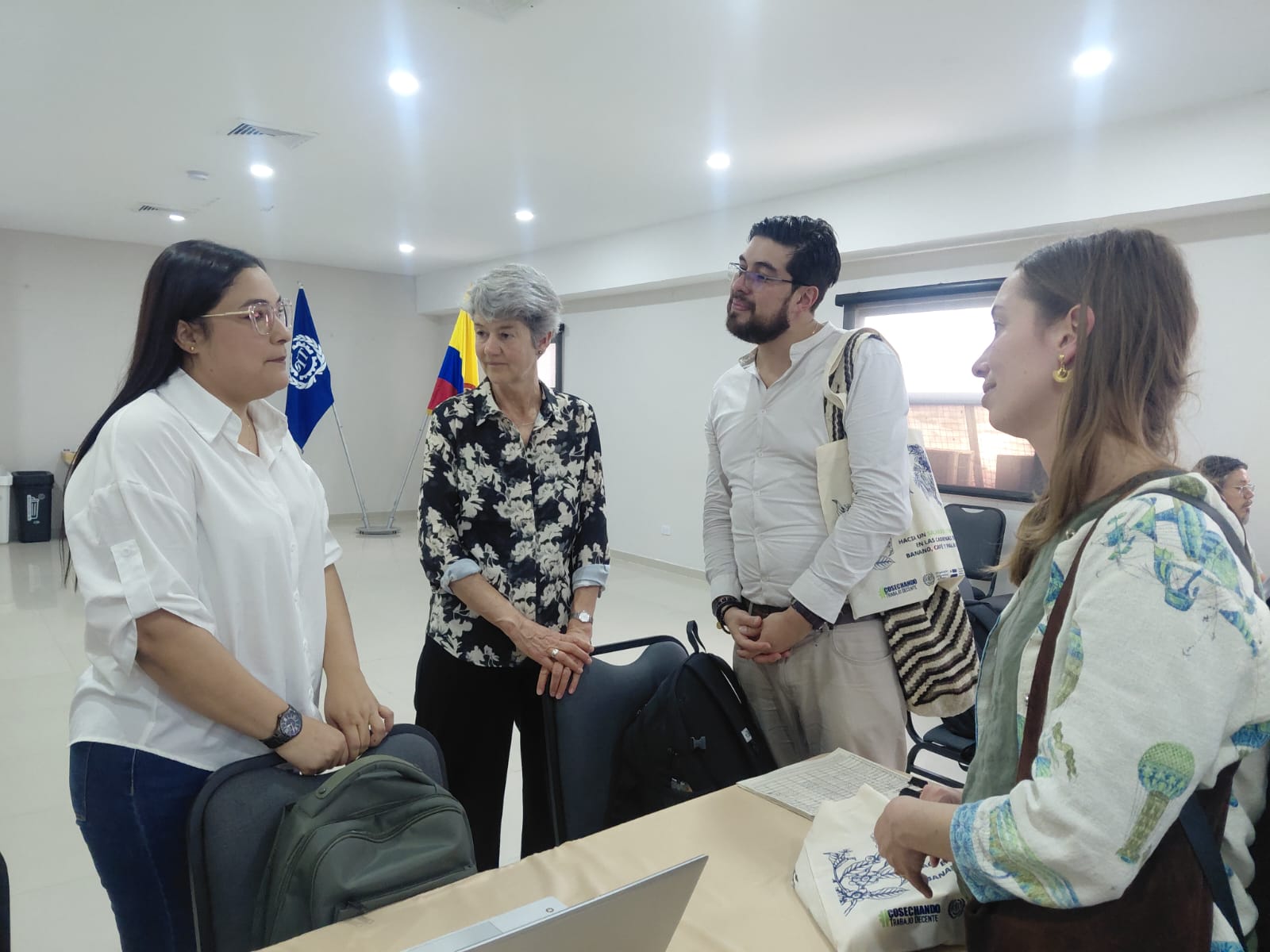
The agenda began on 23 April with a training day organised by the International Labour Organisation (ILO) focused on living wages and incomes in strategic sectors such as palm, bananas and coffee. This event brought together representatives of government, employers and workers, promoting a tripartite dialogue aimed at improving working conditions.
In this framework, key meetings were held with the Ministry of Labour, the banana union and representatives of the International Labour Organization (ILO), with the aim of strengthening institutional relations and exploring new opportunities for articulation around the living wage agenda and collective bargaining.
Trade union participation in the energy transition
On 24 and 25 April, CNV Internationaal, led by Jeanette de Regt, Myrthe Peek and Adriana Guarnizo, participated in the trade union days in the framework of the conference "Beyond Fossil Fuels", organised by the Ministry of Environment and the Embassy of the Netherlands.
These spaces highlighted the importance of collective bargaining as a fundamental tool to ensure fair transitions, as well as the role of incentives and fiscal policy in phasing out fossil fuels.
In addition to the panels, the participation allowed to strengthen links with national and international trade union organisations, including central organisations such as the CUT, CTC and CGT, consolidating cooperation networks for future work.
Territorial work and strengthening of networks
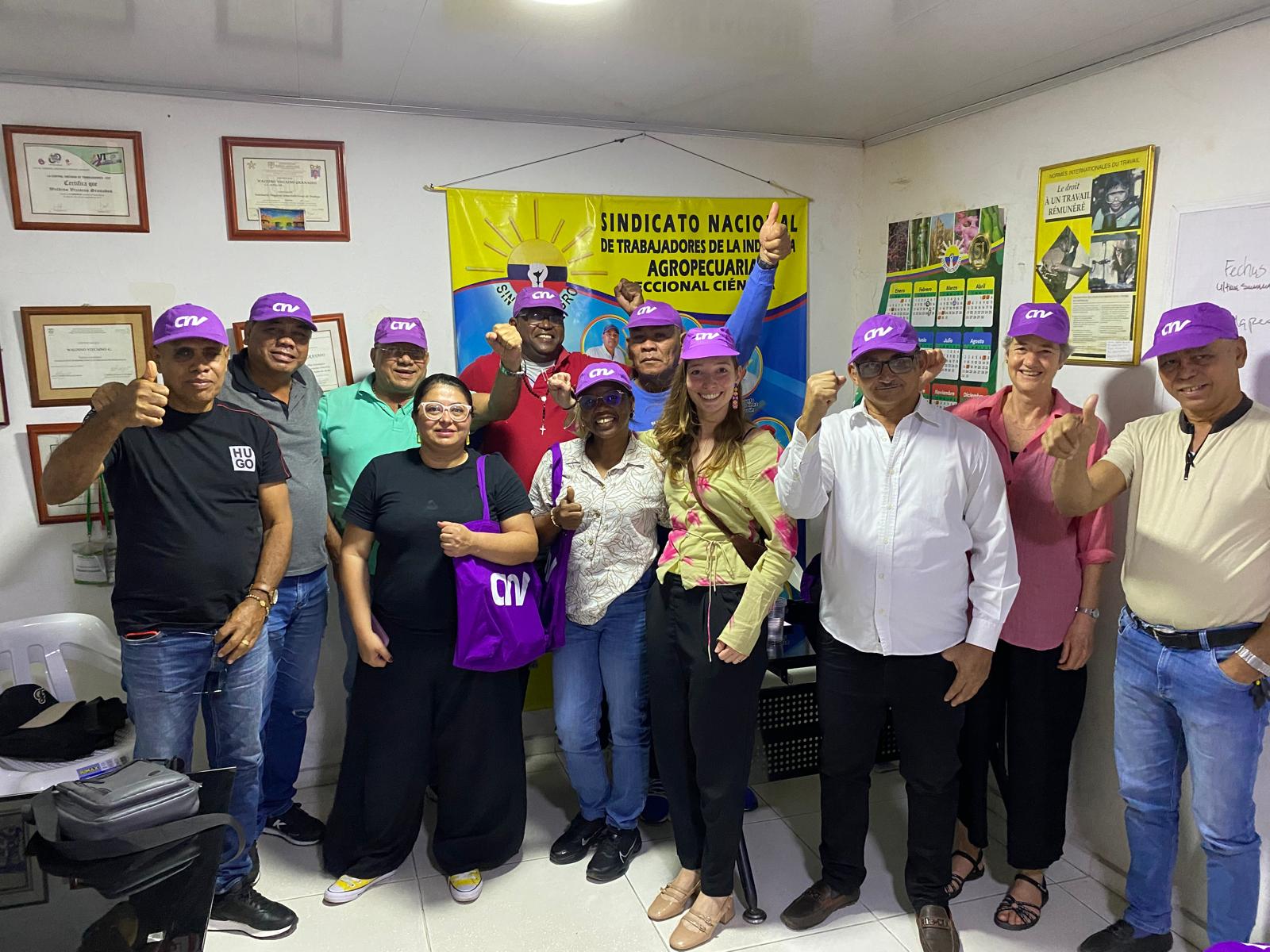
On 26 April, the agenda moved to the territory with a day in Ciénaga, Magdalena, where a meeting was held with the agricultural workers' union SINTRAINAGRO. This space allowed for dialogue with its board of directors and to advance in the definition of joint actions in the palm and banana sectors.
That same day, in the meeting promoted by FESCOL Friedrich Ebert Foundation, important opportunities for articulation were generated with key actors in labour, gender and political advocacy issues, as well as with organisations linked to climate action and representatives of the National Government.
Advocacy and multi-sectoral dialogue
A high-level trade union space with the participation of the Ministries of Mines, Finance and Labour, as well as the country's main trade union centres was held on 27 April. This scenario allowed to position the voice of workers through the participation of the Collective of workers for a just transition in the coal sector in the debate on the energy transition.
During the day, strategic meetings were also held with peer organisations such as FNV and allied organisations such as CREER, focused on strengthening cooperation, social dialogue and advocacy strategies in Colombia.
International cooperation and sustainability initiatives
28 April was marked by meetings focused on international cooperation and the sustainability of ongoing initiatives. Meetings were held with organisations such as Avina and the Ford Foundation, focused on managing resources and strengthening partnerships.
Likewise, a meeting was held with the Collective of Workers for a Just Energy Transition in the coal sector, in which the joint work was acknowledged, their perspectives were heard and the importance of maintaining and expanding cooperation efforts in the country was reaffirmed.
This week of work reaffirms CNV Internationaal 's commitment to promoting fair working conditions and strengthening social dialogue in Colombia. Through the articulation with multiple actors, progress continues to be made in the construction of an energy transition that guarantees the rights of workers and contributes to a fairer and more sustainable development.
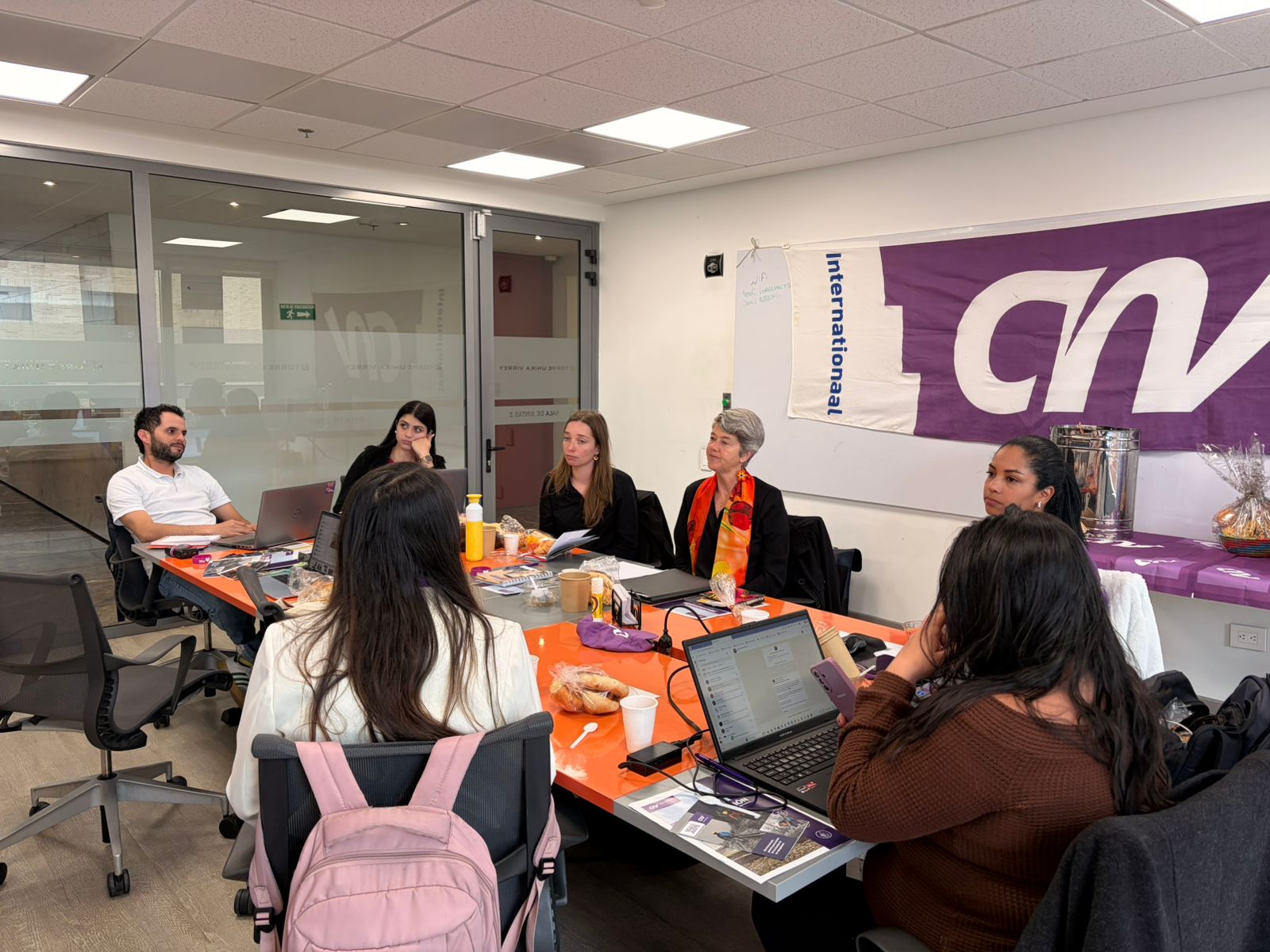
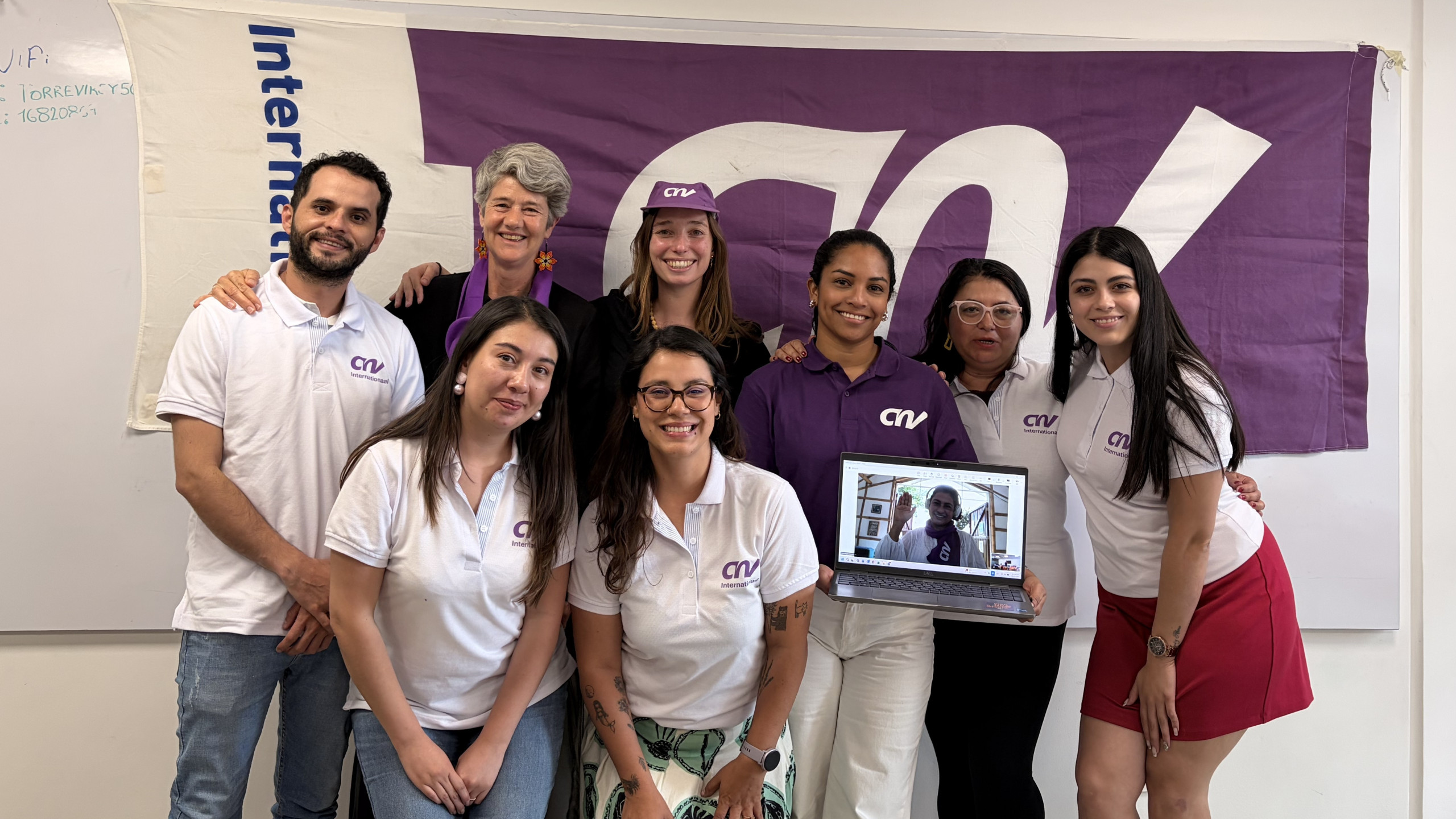
In a complementary manner, a meeting of the entire Latin American team was held on 30 April, with both face-to-face and virtual participation, to reflect on the roles and impact of the work in the region. This space allowed for the alignment of visions, the sharing of lessons learned and the projection of the project's future perspectives, reaffirming the regional approach as a key pillar to strengthen the actions in each country and enhance their results.
Publication date 21 05 2026
 Too hot to work? For millions of workers, it’s not a choice
 Strengthening workers’ human rights in Indonesia’s critical minerals industry
  From Displacement to Empowerment: Women’s Struggle in the Nickel Supply Chain